
 Check order status
 Place reorder
 Chat with us


 Get help
























Precise fit information
Your PD helps ensure that your glasses are fitted to your unique facial measurements.
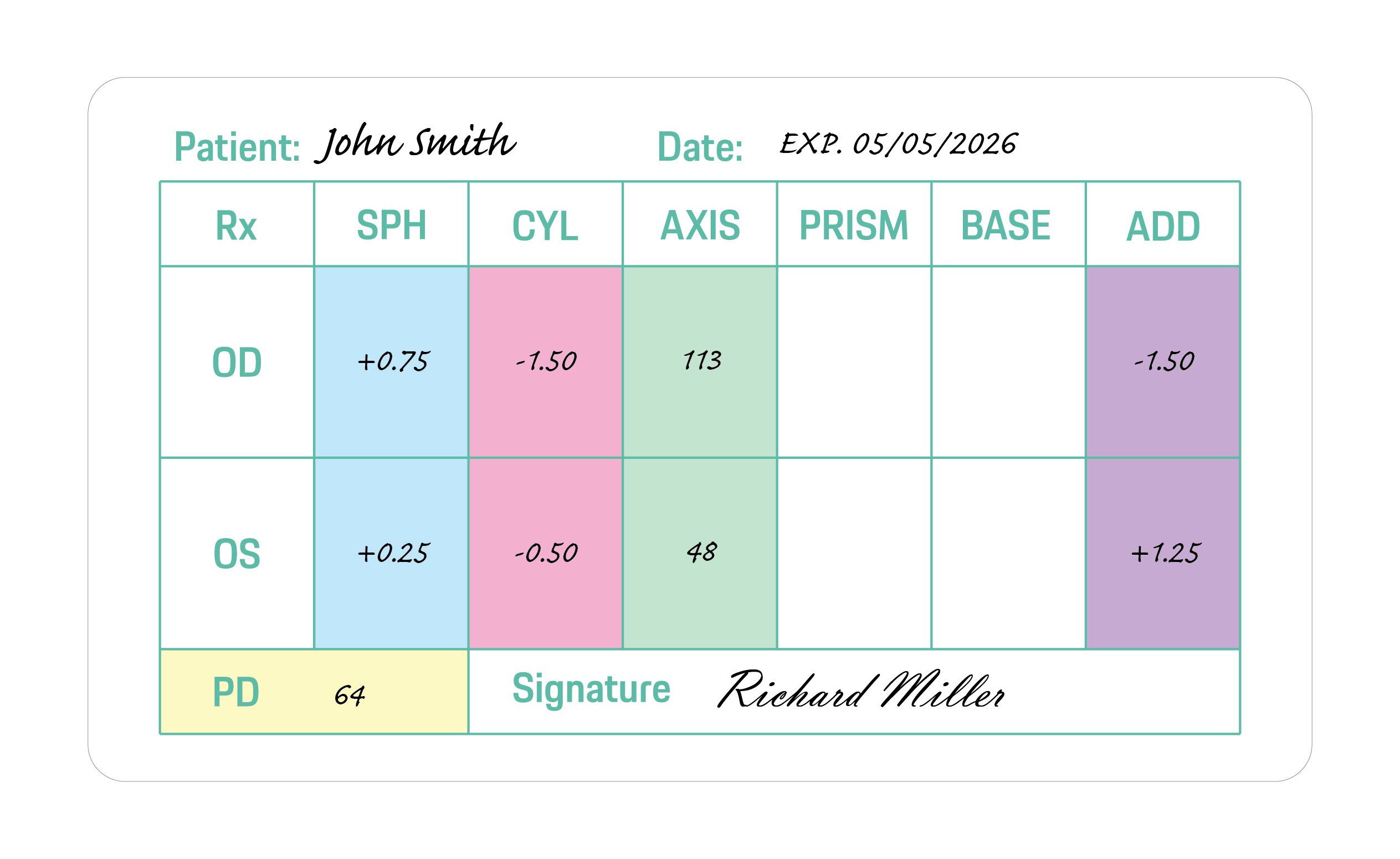
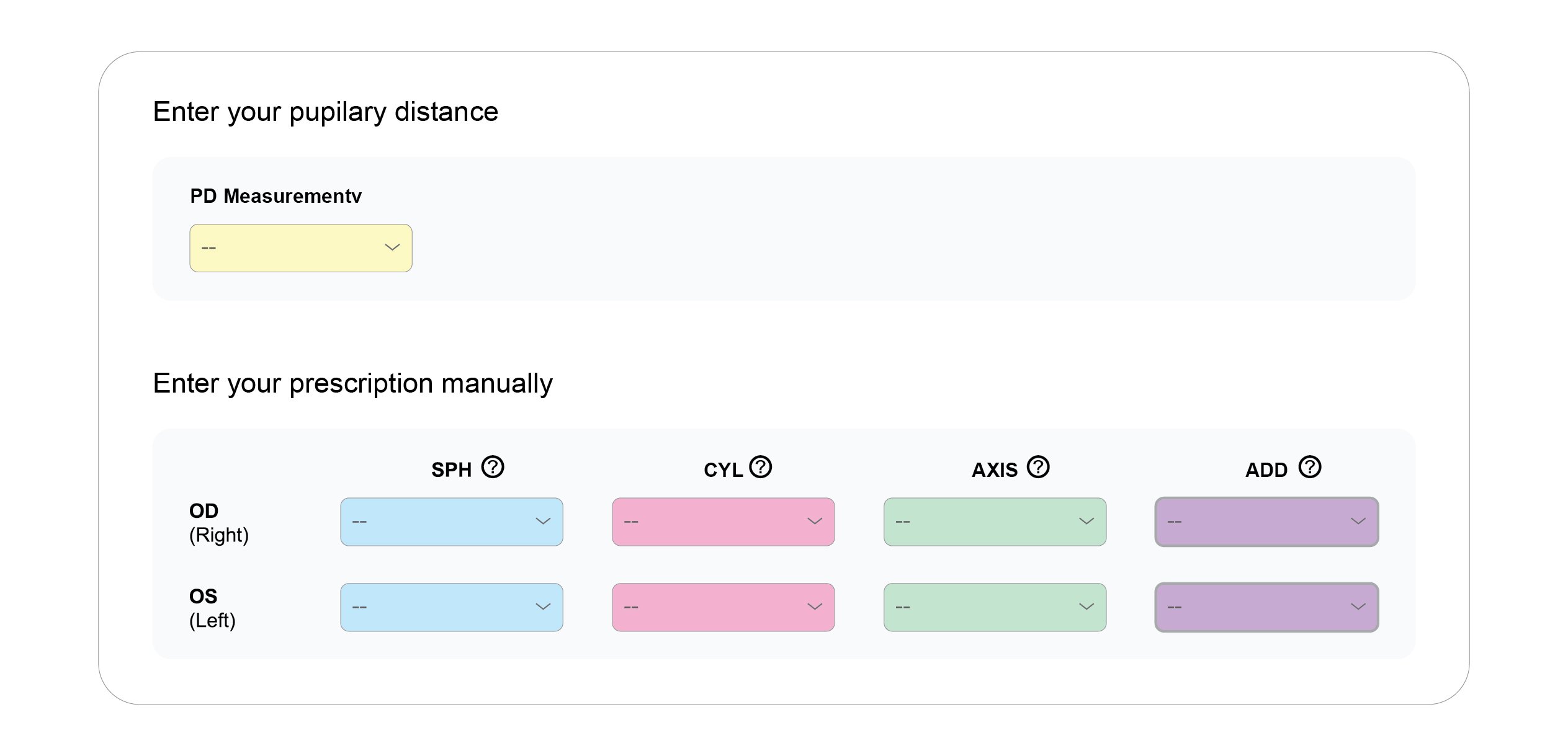
OD is an abbreviation for the Latin term oculus dexter which means right eye. Notice that the right eye information is asked for first even though we typically read from left to right.
OS is an abbreviation of the Latin oculus sinister which means left eye. That will be referenced on the far right column of the prescription.
SPH is short for sphere. The sphere of your prescription indicates the power on the lenses that is needed to see clearly. A plus (+) symbol indicates the eyeglass wearer is farsighted. A minus (-) symbol indicates that the eyeglass wearer is nearsighted.
CYL is short for cylinder. The cylinder indicates the lens power necessary to correct astigmatism. If the column has no value (is blank), it indicates that the eyeglass wearer does not have astigmatism. If this is the case on your prescription, you can leave it blank when entering it in.
AXIS is a prescription will include an axis value for those with astigmatism. This number represents the angle of the lens that shouldn't feature a cylinder power to help correct your astigmatism.
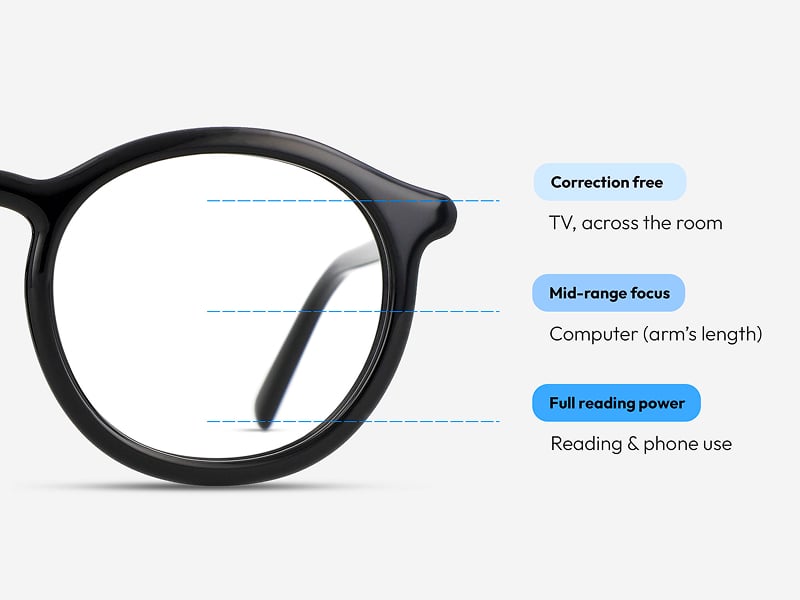
ADD is short for "additional correction." This is where details about bifocals, multifocal lenses or progressive lenses would appear.
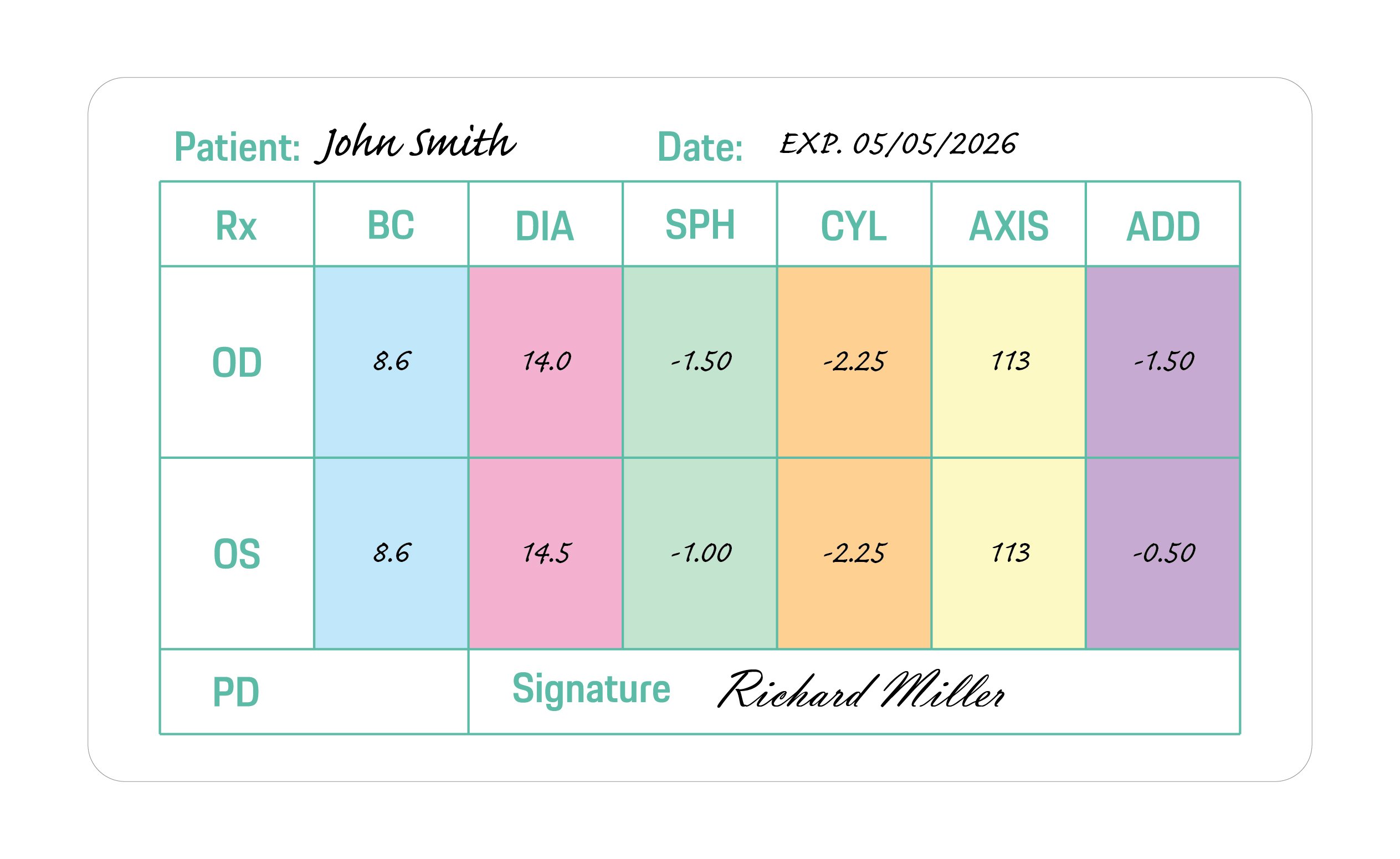
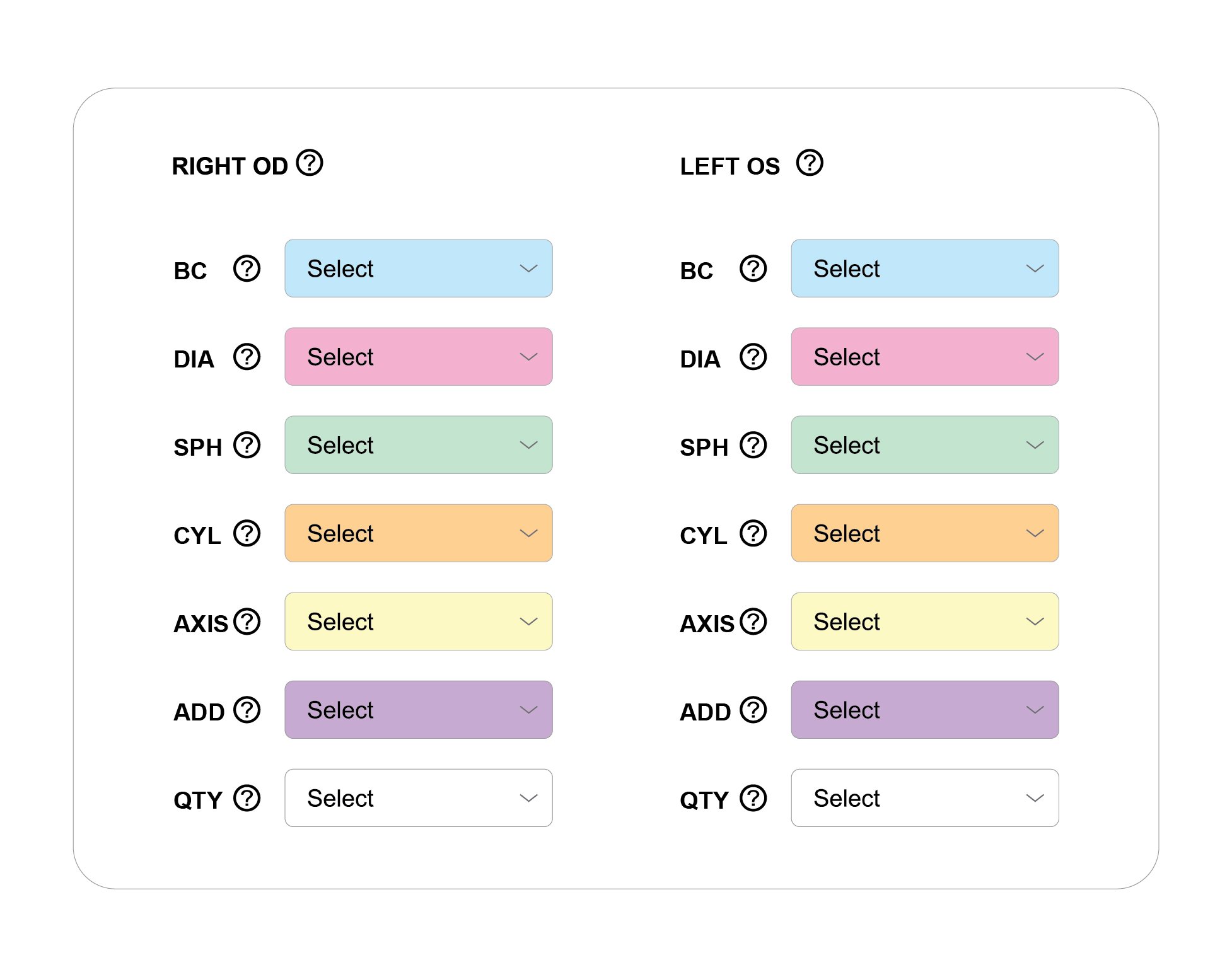
OD is an abbreviation for the Latin term oculus dexter which means right eye. Notice that the right eye information is asked for first even though we typically read from left to right.
OS is an abbreviation of the Latin oculus sinister which means left eye. That will be referenced on the far right column of the prescription.
B.C. is short for base curve measurement indicates the back curvature of your contact lens, in millimetres. This is important for comfort, as the BC of your contact lenses should match your eye's natural curve as closely as possible to ensure a better fit when you are wearing your contact lenses.
DIA is short for "diameter," or the distance from one edge of the contact lens to the other. This is measured in millimeters.
SPH is short for sphere. The sphere of your prescription indicates the power on the lenses that is needed to see clearly. A plus (+) symbol indicates the eyeglass wearer is farsighted. A minus (-) symbol indicates that the eyeglass wearer is nearsighted.
CYL is short for cylinder. The cylinder indicates the lens power necessary to correct astigmatism. If the column has no value (is blank), it indicates that the eyeglass wearer does not have astigmatism. If this is the case on your prescription, you can leave it blank when entering it in.
AXIS is a prescription will include an axis value for those with astigmatism. This number represents the angle of the lens that shouldn't feature a cylinder power to help correct your astigmatism.
ADD is short for "additional correction." This is where details about bifocals, multifocal lenses or progressive lenses would appear.
*Discount applied on the current website price at the time of order. Offer only valid for new customer first contacts order over $10. Maximum discount of $100. Cannot be combined with any other offers. Promotions are subject to change without notice. We reserve the right to cancel orders that are in breach of the terms and conditions of this offer.




 Search Products




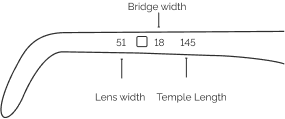
| Lens Width | Bridge Width | Temple Length | |
|---|---|---|---|
| XS | < 42 mm | < 16 mm | <=128 mm |
| S | 42 mm - 48 mm | 16 mm - 17 mm | 128 mm - 134 mm |
| M | 49 mm - 52 mm | 18 mm - 19 mm | 135 mm - 141 mm |
| L | >52 mm | >19 mm | >= 141 mm |
Buying eyewear should leave you happy and good-looking. Use our sizing tool to find frames that best fit your unique facial measurements.
Your PD helps ensure that your glasses are fitted to your unique facial measurements.
Use the camera on your mobile device or computer for an instant measurement.
No camera-enabled device? Download and print the paper PD measurement tool instead.
PD, or Pupillary Distance, is the distance between your pupils. It is a crucial measurement for ensuring the perfect fit of your glasses. Measuring your PD is now easier than ever with our new camera-based PD measurement tool.
The distance between your pupils.
It helps ensure the proper fit when ordering your glasses.
Measure with your camera or download a printable ruler.
Our camera-based PD measurement tool utilizes the camera on your mobile device or computer to provide you with an instant and precise measurement.
Click "START NOW" below.
Grant camera access if prompted.
Follow the on-screen instructions to position your face correctly.
Get your instant and precise PD measurement.
For the most accurate results, we recommend using an iPhone, as it takes advantage of the depth sensor in the front-facing camera.
We have designed this tool to be quick, user-friendly, and highly accurate, ensuring you have the most precise PD measurement for ordering your glasses.
Do not have a camera-enabled device? No worries. We also offer paper and print-at-home methods for obtaining your PD. Choose your preferred method below.
Grab a regular card with a magnetic stripe on the back. Student IDs, credit cards, and gift cards work well to start our online PD tool.
You may have received our paper PD measurement tool in your recent online order. Place the ruler on your eyes so that the "0" lines up at the centre in between your eyes. Add up the two numbers to get your PD. See the example below.
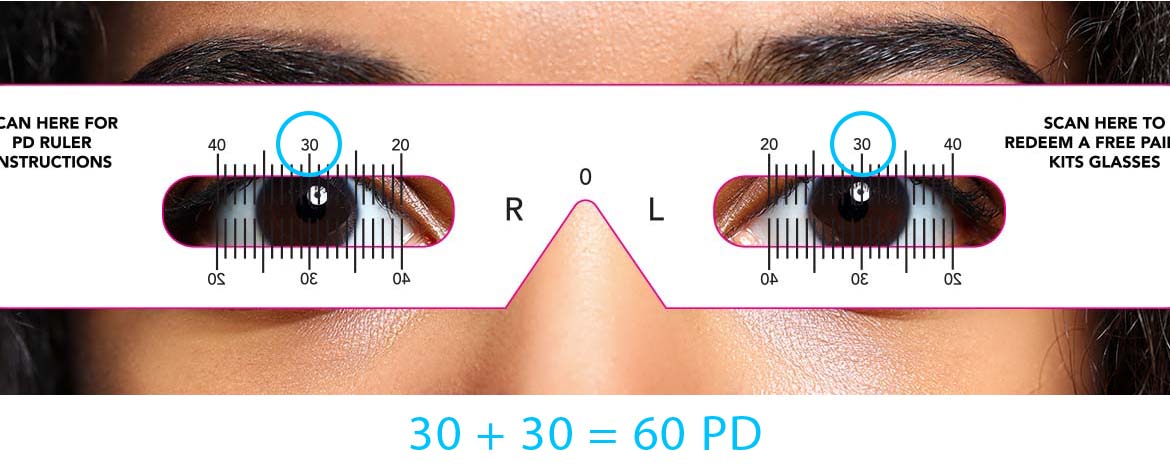
Click the link below to download and print your own PD measurement tool.
At Kits, we are dedicated to providing you with a seamless and customer-focused eyewear experience. With our easy-to-use PD measurement tools, you can confidently order glasses that fit you perfectly.